

A Home With a Sustainability Story
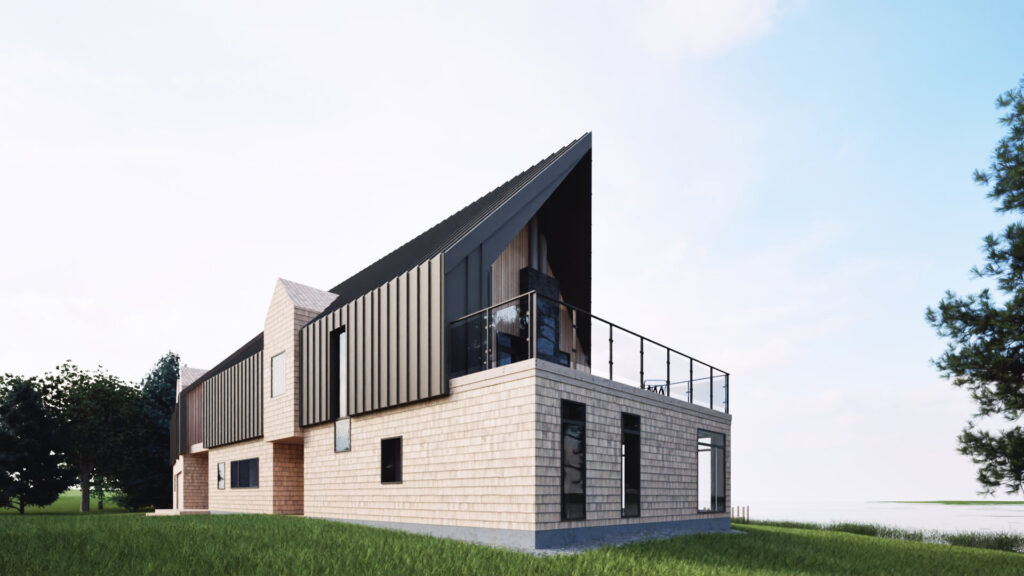
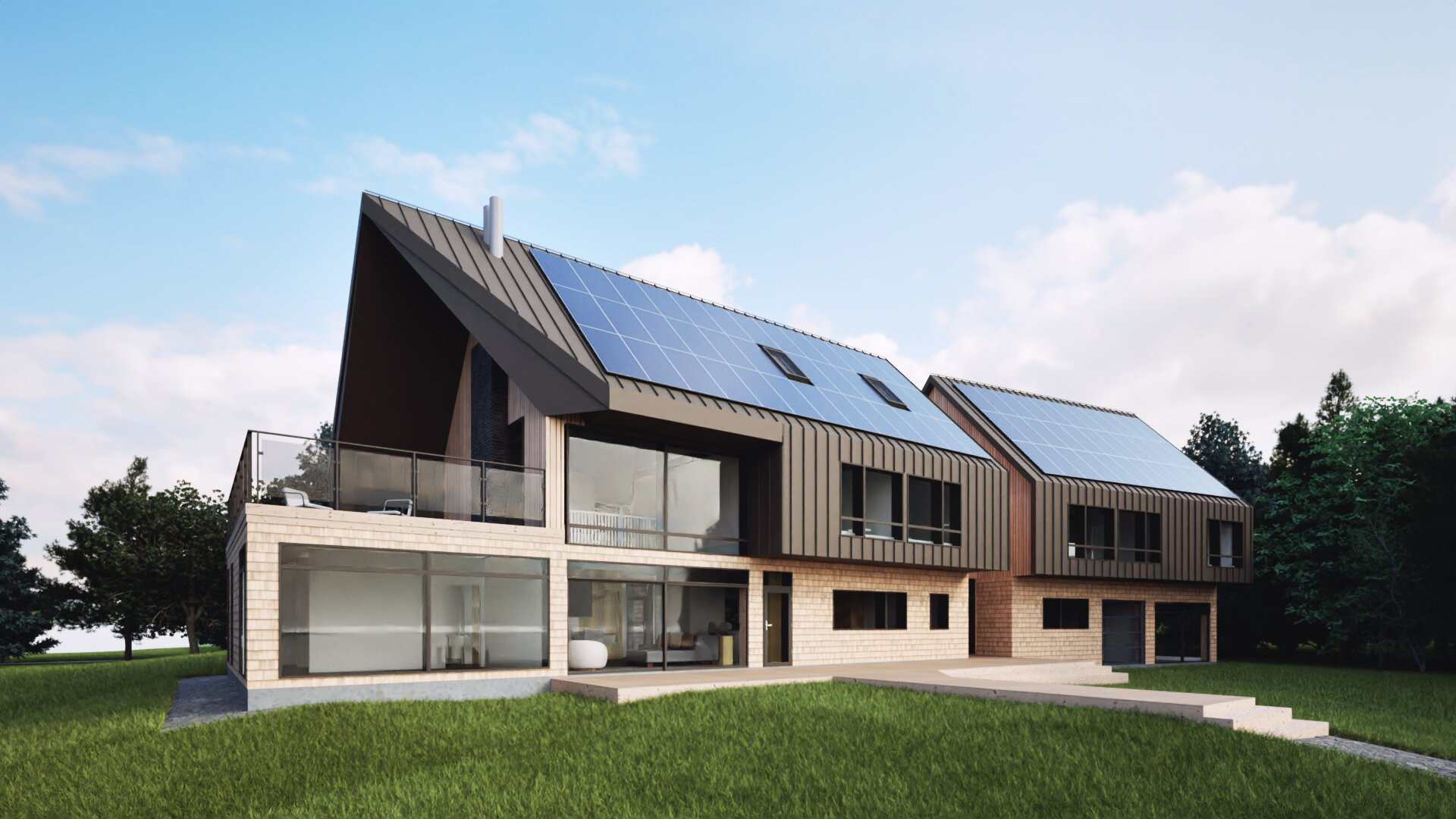
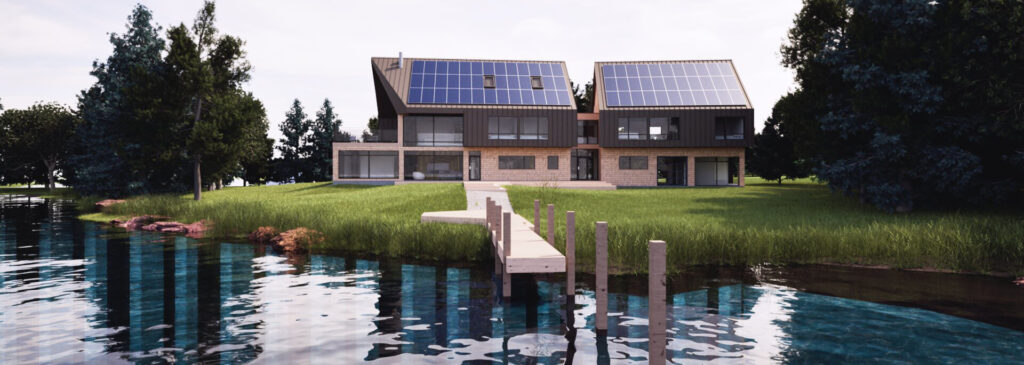
The Net-zero Zero Carbon Millhouse sits on the edge of Wisener Pond in Mount Stewart, Prince Edward Island, on land with a history as distinctive as the building itself. The site was once the “lay-down area” of a sawmill owned by the Wisener family, and the home takes its name from that heritage. Designed by Sable/ARC of Charlottetown, the residence has been described as a “farmhouse industrial.”
What makes this home remarkable is not just its setting, but what it represents: the first net zero carbon single-family home in Canada to be certified Journey to Net Zero™ Carbon. It reached that distinction not through compromise, but through design. Sable/ARC achieved this by following GBI’s Journey to Net Zero™ program from the beginning.
Designed Around the Journey to Net Zero™
GBI’s Journey to Net Zero™ program served as the architectural framework for the entire project, shaping decisions at every stage from site planning through systems selection. The result is a home where sustainability and liveability are not in tension — they are the same thing.
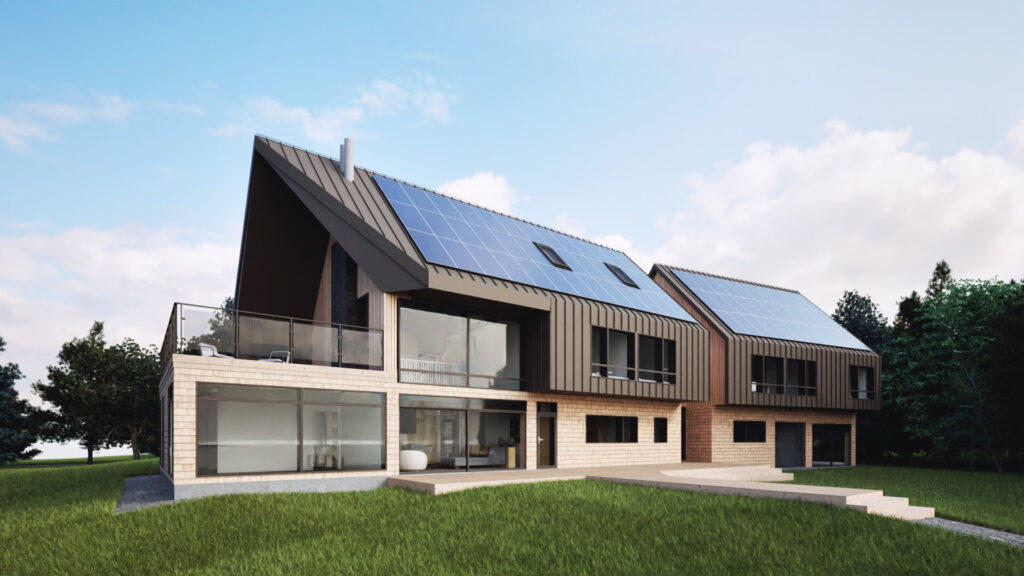
The design team incorporated a comprehensive suite of high-performance features, including:
- Roof-mounted solar panels for on-site renewable energy generation
- Passive ventilation techniques to reduce mechanical load
- Highly insulating wall and roof systems that far exceed code minimums
- High-performance glazing to optimize solar gain while limiting heat loss
- Energy recovery ventilators (ERVs) to maintain indoor air quality without sacrificing efficiency
“From the outset, our priorities and commitment never wavered from the desire to create an energy-efficient, eco-effective, net-zero/zero-carbon home that was warm, inviting, attractive, site-specific and harmonious with its environment. Although there are many great certification programs… GBI’s Journey to Net Zero program seems most suited to our project. We appreciate what the other certification programs have to offer, but the focus on net-zero and zero-carbon has become the next step in sustainable design and building.”— Robert Haggis, Sable/ARC
Performance by the Numbers
NZC Millhouse doesn’t just meet high-performance benchmarks, it redefines what a residential building can achieve. The table below compares the home’s key performance specifications against typical Canadian residential standards.
| Feature | NZC Millhouse | Typical Canadian Home |
| Wall insulation | R-37.7 | R-20 to R-25 |
| Roof/ceiling insulation | R-60 | ~R-40 |
| Floor/slab insulation | R-14.0 | R-10 to R-12 |
| Glazing U-value | 0.13 | 0.3–0.5 |
| Glazing SHGC | 0.59 | Varies |
| Heat pump efficiency | EER2=14 / SEER2=23 / HSPF2=9.6 | Lower rated equipment typical |
| Heat pump cold weather | 100% capacity at −30°C | Performance degrades below −8°C |
| Water heater (UEF) | 4.07 (hybrid heat pump) | 0.6–0.9 (conventional) |
| Air infiltration | 0.06 L/(s·m·Pa^0.6) | Higher — less airtight |
Why It Matters
The residential sector is one of Canada’s most significant sources of energy consumption and greenhouse gas emissions. NZC Millhouse demonstrates that a single-family home in a cold Canadian climate can be built to a genuine net zero carbon standard without sacrificing comfort, aesthetics, or livability.
By using GBI’s Journey to Net Zero™ program as its design compass, Sable/ARC produced a home that is warm, site-specific, and deeply connected to its PEI landscape — and one that sets a new benchmark for what residential architecture in Canada can aspire to.